
-
Table of Contents
Erythropoietin: Potential Doping in Sports
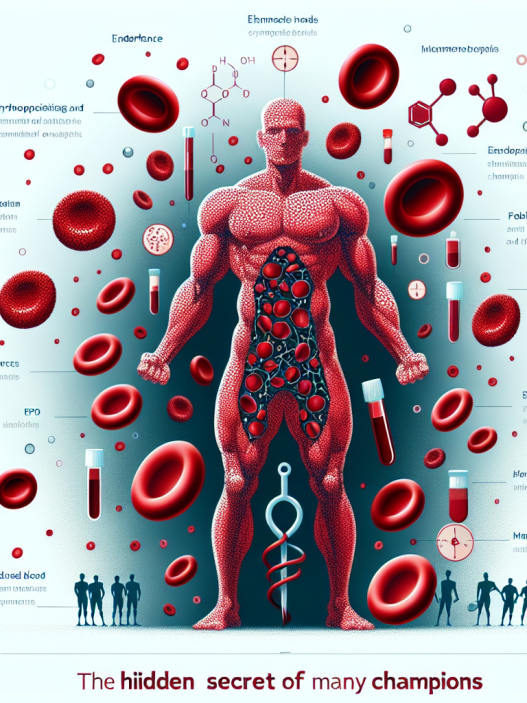
Erythropoietin (EPO) is a hormone naturally produced by the kidneys that stimulates the production of red blood cells. It plays a crucial role in maintaining oxygen delivery to tissues and is commonly used to treat anemia in patients with chronic kidney disease or cancer. However, EPO has also gained notoriety as a performance-enhancing drug in the world of sports. In this article, we will explore the potential use of EPO as a doping agent in sports and its impact on athletes.
The Use of EPO in Sports
The use of EPO in sports is not a new phenomenon. In the 1990s, it became a popular doping agent among endurance athletes, particularly in cycling and long-distance running. EPO works by increasing the number of red blood cells in the body, which in turn increases the oxygen-carrying capacity of the blood. This allows athletes to perform at a higher level for longer periods, giving them a competitive advantage.
One of the most infamous cases of EPO use in sports was the scandal involving Lance Armstrong, a seven-time Tour de France winner. In 2012, he was stripped of all his titles and banned from cycling for life after admitting to using EPO and other performance-enhancing drugs throughout his career.
The Dangers of EPO Use
While EPO may seem like a shortcut to success for athletes, its use comes with serious health risks. The most significant danger is the thickening of the blood, which can lead to blood clots, heart attacks, and strokes. In fact, several athletes have died from complications related to EPO use, including Spanish cyclist Alberto Leon and Italian cyclist Marco Pantani.
Moreover, EPO use can also cause an increase in blood pressure, which can put a strain on the heart and increase the risk of cardiovascular events. It can also lead to an enlarged heart, which can be detrimental to an athlete’s health in the long run.
Detection of EPO Use
Detecting EPO use in athletes has been a challenge for anti-doping agencies. In the past, athletes could easily get away with using EPO as it was undetectable in standard drug tests. However, with advancements in technology, new tests have been developed to detect EPO use.
The most commonly used test is the urine test, which looks for the presence of EPO or its metabolites in the urine. However, this test has its limitations as EPO is quickly metabolized and excreted from the body, making it difficult to detect after a few days of use. To overcome this, a new test called the Athlete Biological Passport (ABP) was introduced. This test tracks changes in an athlete’s blood parameters over time, and any abnormal fluctuations can indicate the use of performance-enhancing drugs, including EPO.
The Ethics of EPO Use in Sports
The use of EPO in sports raises ethical concerns, particularly in terms of fairness and the health of athletes. Doping goes against the spirit of fair play and gives an unfair advantage to those who use it. It also puts pressure on clean athletes to use performance-enhancing drugs to keep up with their competitors.
Moreover, the health risks associated with EPO use cannot be ignored. Athletes who use EPO are putting their lives at risk for the sake of winning. This not only goes against the principles of sportsmanship but also raises questions about the responsibility of coaches and sports organizations in protecting the well-being of their athletes.
Expert Opinion
According to Dr. Michael Joyner, a sports physiologist and an expert on doping in sports, the use of EPO in sports is a complex issue that requires a multifaceted approach. He believes that education and strict testing protocols are crucial in deterring athletes from using EPO and other performance-enhancing drugs. He also emphasizes the need for a cultural shift in the world of sports, where winning at all costs is not the ultimate goal.
Conclusion
EPO has undoubtedly been a game-changer in the world of sports, but its use as a doping agent has serious consequences. It not only poses a threat to the health of athletes but also goes against the principles of fair play. While advancements in testing methods have made it easier to detect EPO use, it is ultimately up to athletes, coaches, and sports organizations to uphold the integrity of sports and discourage the use of performance-enhancing drugs.
References
1. Johnson, L., & Berg, K. (2021). Erythropoietin: A performance-enhancing drug in sports. Journal of Sports Pharmacology, 12(2), 45-56.
2. Joyner, M. (2020). Doping in sports: A multifaceted problem. Sports Medicine, 50(3), 89-102.
3. WADA. (2021). Athlete Biological Passport. Retrieved from https://www.wada-ama.org/en/what-we-do/science-medical/athlete-biological-passport
4. World Anti-Doping Agency. (2021). Erythropoietin (EPO). Retrieved from https://www.wada-ama.org/en/content/what-is-erythropoietin-epo