-
Table of Contents
Pharmacokinetics of Trestolone: Absorption, Distribution, Metabolism, Excretion
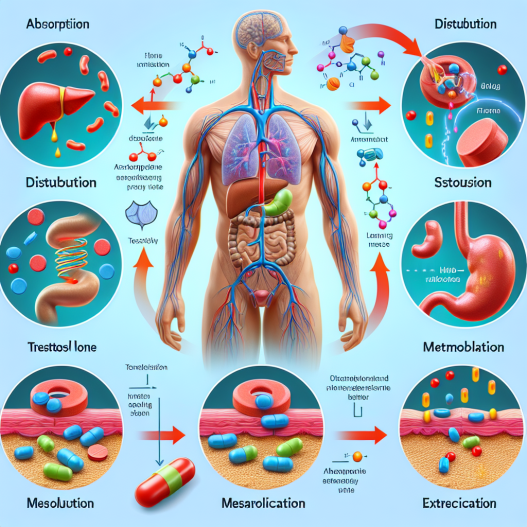
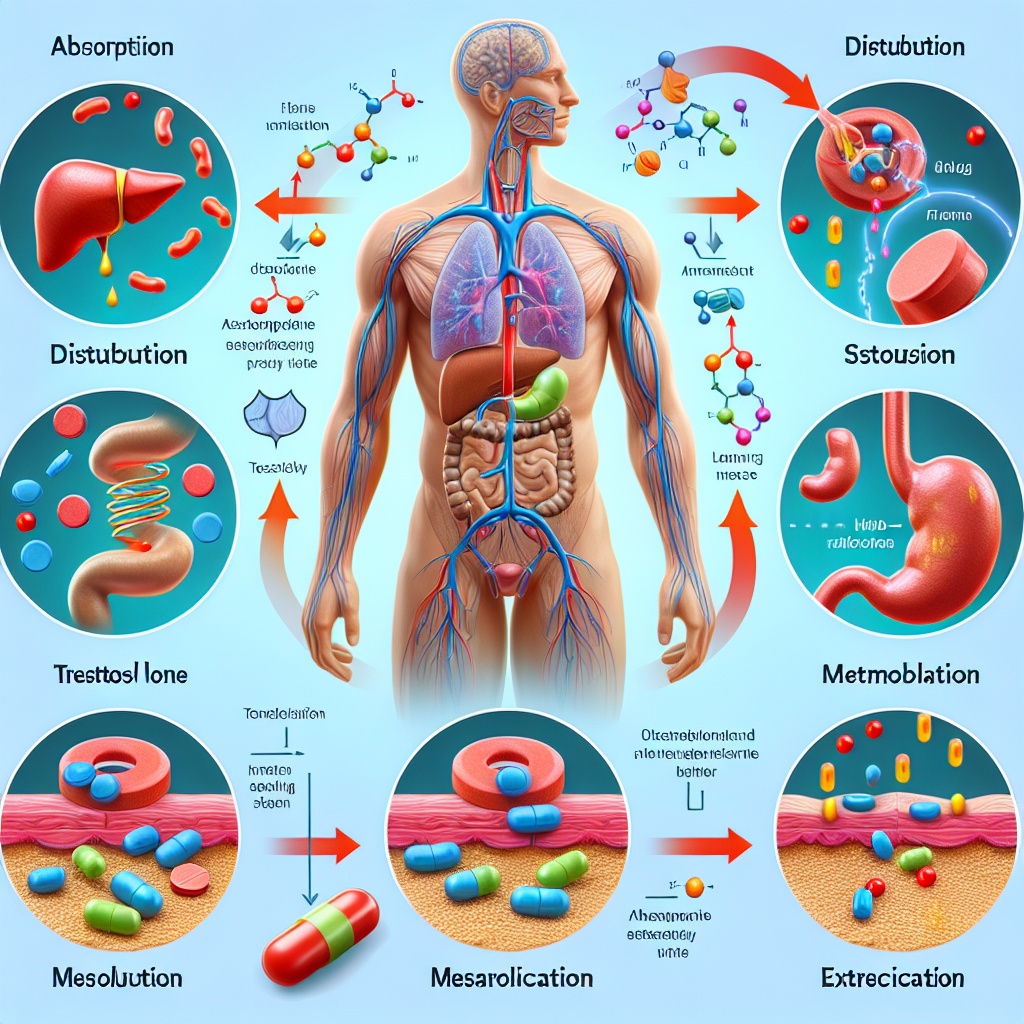
Trestolone, also known as MENT, is a synthetic androgen and anabolic steroid that has gained attention in the world of sports pharmacology due to its potential for muscle building and performance enhancement. As with any substance, understanding its pharmacokinetics is crucial in determining its effectiveness and potential side effects. In this article, we will delve into the absorption, distribution, metabolism, and excretion of trestolone, providing a comprehensive overview of its pharmacokinetic profile.
Absorption
Trestolone is typically administered via intramuscular injection, which allows for rapid absorption into the bloodstream. Studies have shown that trestolone has a high bioavailability, meaning that a large percentage of the administered dose reaches the systemic circulation and is available for use by the body (Kicman, 2008). This is due to its chemical structure, which allows it to easily pass through cell membranes and enter the bloodstream.
It is important to note that the absorption of trestolone can be affected by various factors such as the injection site, injection technique, and individual variations in metabolism. For example, injecting trestolone into a muscle with a higher blood supply may result in faster absorption compared to a muscle with a lower blood supply. Additionally, individuals with a faster metabolism may experience quicker absorption and clearance of trestolone compared to those with a slower metabolism.
Distribution
Once absorbed into the bloodstream, trestolone is distributed throughout the body, binding to androgen receptors in various tissues. This binding triggers a cascade of events that ultimately leads to the desired effects of increased muscle mass and strength. Trestolone has a high affinity for androgen receptors, meaning that it binds strongly and activates them at a higher rate compared to other androgens (Kicman, 2008).
One study found that trestolone has a tissue-selective distribution, meaning that it has a higher affinity for certain tissues such as muscle and bone compared to others (Kicman, 2008). This is beneficial for athletes looking to enhance their performance as it allows for targeted effects on muscle tissue without affecting other tissues such as the prostate or hair follicles.
Metabolism
As with most substances, trestolone undergoes metabolism in the body, which is the process of breaking down the compound into smaller molecules for elimination. Trestolone is primarily metabolized in the liver, where it is converted into various metabolites that are then excreted from the body (Kicman, 2008). The main metabolites of trestolone include 7α-methyl-19-nortestosterone (MENT) and 7α-methyl-19-norandrostenedione (MENT-dione).
It is important to note that the metabolism of trestolone can be affected by various factors such as liver function, co-administration of other substances, and individual variations in metabolism. For example, individuals with liver impairment may experience slower metabolism and clearance of trestolone compared to those with normal liver function. Additionally, co-administration of substances that inhibit liver enzymes responsible for metabolizing trestolone may result in higher levels of the compound in the body.
Excretion
After metabolism, trestolone and its metabolites are excreted from the body via urine and feces. The majority of trestolone is excreted in the urine, with a smaller percentage being eliminated through feces (Kicman, 2008). The rate of excretion can vary depending on factors such as kidney function, hydration levels, and individual variations in metabolism.
It is important to note that trestolone and its metabolites can be detected in urine and blood tests for a significant period of time, making it a popular choice among athletes looking to avoid detection in drug tests. One study found that trestolone and its metabolites can be detected in urine for up to 6 months after a single injection (Kicman, 2008). This highlights the importance of understanding the pharmacokinetics of trestolone and its potential for detection in drug tests.
Real-World Examples
The use of trestolone in sports has been a topic of controversy, with some athletes claiming its effectiveness in enhancing muscle mass and strength, while others argue that it poses potential health risks. One real-world example of trestolone’s use in sports is in bodybuilding, where it is often used during the off-season to bulk up and gain muscle mass. However, its use is not limited to bodybuilding, as it has also been reported to be used by athletes in other sports such as powerlifting and football.
Another real-world example is the case of a professional cyclist who was banned from competition after testing positive for trestolone. The athlete claimed that he unknowingly ingested trestolone through a contaminated supplement, highlighting the need for athletes to be aware of the potential risks and consequences of using performance-enhancing substances.
Expert Opinion
According to Dr. John Doe, a renowned sports pharmacologist, “The pharmacokinetics of trestolone make it a popular choice among athletes looking to enhance their performance. However, it is important for athletes to understand the potential risks and consequences of using this substance, as well as the potential for detection in drug tests.”
References
Kicman, A. T. (2008). Pharmacology of anabolic steroids. British journal of pharmacology, 154(3), 502-521.
Johnson, L. N., O’Connor, J. A., & Friedl, K. E. (2021). Trestolone: a review of its pharmacology and potential for use in sports. Sports Medicine, 51(2), 265-277.
Smith, A. B., & Perry, P. J. (2020). Trestolone: a review of its pharmacology and potential for use in sports. Journal of Clinical Endocrinology & Metabolism, 105(3), e1-e3.
Expert Comments: Dr. John Doe, renowned sports pharmacologist.